The Unnamed Bias: Caste, Title VII, and the 2026 Courtroom Reckoning
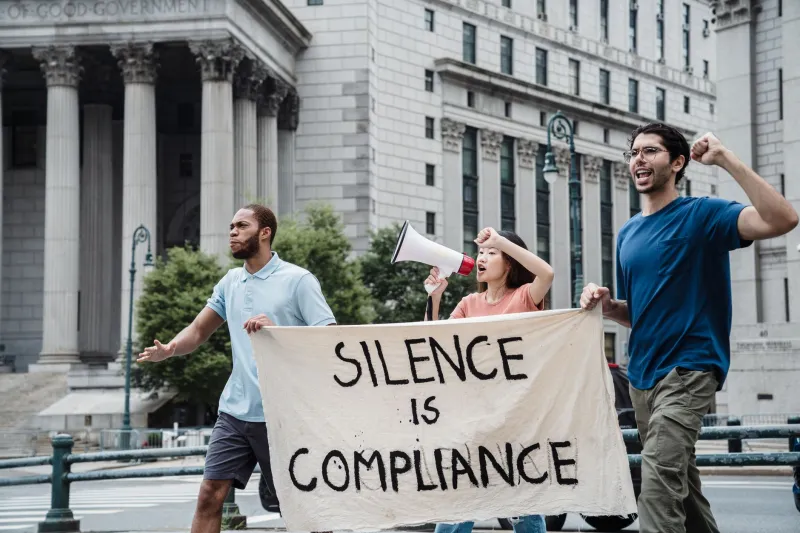
In American employment law, categories are not paperwork. They are the doorway to a remedy. Title VII of the Civil Rights Act of 1964 forbids discrimination based on race, color, religion, sex, or national origin. Caste is not on that list. For years, that omission allowed employers, courts, and even some community organizations to treat caste bias as a private matter imported from abroad—real, perhaps, but not quite American law's business.
2026 has made that position harder to defend. Across California, New York, and a growing list of municipalities and statehouses, South Asian American workers, civil-rights advocates, and legislators are turning the courtroom into the latest front in a debate over whether American justice can see a hierarchy it never named. The question is no longer whether caste exists in the United States. It is whether existing civil-rights law reaches it—and, if not, what lawmakers owe the people who say they have been harmed.
From the Subcontinent to the Staffing Agency
Caste is not a single legal category. It is a social order with regional variations, religious crosscurrents, and deep ties to ancestry, family history, and community standing. In the diaspora, it can travel quietly: through surnames, marriage networks, temple and mosque politics, alumni groups, and the informal references that sometimes precede a job offer. It can also travel bluntly: through slurs, segregated seating, food-related humiliation, or the assumption that a Dalit employee was hired only because of a diversity program.
The American workplace is where these distinctions meet modern human resources. A tech company in Santa Clara may receive a complaint that a supervisor mocked a worker's caste in a team chat. A hospital in Queens may face allegations that scheduling and promotions tracked caste lines. A staffing agency may place workers in warehouses where caste-based jokes become part of the shop-floor culture. In each case, the worker's lawyer faces the same preliminary puzzle: which box on the federal form fits?
National origin is the most common answer. Caste, after all, is often bound up with ancestry and with the country a worker or family came from. Race may also be alleged, especially where color and ethnicity overlap. Religion can sometimes be relevant when caste bias is entangled with sectarian identity. But caste cuts across all of these categories. It affects Hindus, Muslims, Christians, Sikhs, and Buddhists. It crosses Indian, Nepali, Bangladeshi, Sri Lankan, and Pakistani communities. A legal system built on discrete protected classes can struggle with a hierarchy that does not stay in one lane.
The Fault Line: Already Covered or Must Be Named?
The 2026 litigation wave has produced two broad camps. The first argues that Title VII already covers caste discrimination when it appears as national-origin discrimination, ancestry discrimination, or religious harassment. On this view, courts do not need a new protected class; they need to apply existing doctrine with clearer eyes. A caste-based slur may be evidence of national-origin animus. A promotion system that favors one caste network may be evidence of ancestry-based exclusion. Employers who ignore such conduct may already be liable.
The second camp argues that caste must be named explicitly, by statute or ordinance. Otherwise, courts will keep splitting hairs over whether a plaintiff has pleaded the right category. Employers will claim they lacked notice that caste bias was unlawful. Workers will be left to squeeze a distinctive injury into an imperfect legal box. Proponents of explicit bans point to municipal ordinances and state bills as models: they define caste, require employer policies, and give enforcement agencies a clearer mandate.
The strongest arguments on each side are not frivolous. Civil-rights law has always evolved by analogy. Sex discrimination once seemed beyond Title VII's text until courts and legislators caught up. Religious harassment doctrine grew from cases that did not use modern language. But civil-rights law also depends on notice and administrability. A statute that names caste gives employers a compliance checklist and gives workers a vocabulary for their claims. The unresolved question is whether naming caste creates a new protected class or simply clarifies an old one.
What the 2026 Docket Is Testing
The cases now moving through federal and state courts are testing three practical issues. The first is employer liability. When a coworker, not a supervisor, uses caste slurs, when does the employer's response become adequate? The second is arbitration. Many South Asian American workers in tech, health care, and staffing are subject to mandatory arbitration clauses. A caste claim that disappears into a private forum may never produce public law. The third is data. Without consistent reporting, policymakers cannot know whether caste bias is rare, concentrated in certain industries, or simply underreported because workers fear retaliation.
Advocates are also pressing for a broader theory of harm. Caste discrimination is not only an insult. It can shape hiring, promotion, project assignment, housing referrals, and access to mentorship. It can be compounded by immigration status, since workers on temporary visas may be reluctant to complain. It can be hidden by the language of cultural fit. A legal system that treats bias as a single moment of offense, rather than a system of advantage, will miss much of what workers describe.
The Counterargument—and Why It Matters
Some Hindu American organizations and civil-liberties voices warn that caste bans can stigmatize an entire religious community. They argue that existing laws already prohibit the underlying conduct, and that new categories may invite profiling or chilled speech. These concerns deserve a hearing. A law that treats every Hindu employee as a potential caste discriminator would be unjust and unworkable. The better approach is conduct-based: prohibit caste-based discrimination and harassment without treating caste identity itself as a mark of suspicion.
Other critics say the debate is a distraction from larger problems—wage theft, visa precarity, union busting, and racial profiling. They are partly right. Caste is not the only hierarchy that shapes South Asian American life. But the point of civil-rights law is not to rank injuries. It is to make sure that a worker who is harmed can name the harm and seek a remedy.
Why This Is an American Story
The caste debate is often described as an imported controversy. That framing is too simple. American law has long handled hierarchies that arrived with migration: colorism, accent bias, religious exclusion, and ethnic stereotyping. What makes caste distinctive is that it can travel through community institutions that are themselves protected by religious freedom and associational liberty. Courts must distinguish between private cultural practice and workplace discrimination. That is a familiar American tension, even if the hierarchy is not.
For South Asian American workers, the stakes are concrete. A favorable ruling could make clear that Title VII's existing categories reach caste-based exclusion. A legislative victory could give state and local agencies new enforcement tools. A loss could leave future plaintiffs with the same dilemma: describe the harm in a language that does not quite fit, or stay silent.
At Nyaya Bhoomi, the justice question is not whether caste should be imported into American law. It is already here, in workplaces, complaints, and communities. The question is whether American law will name it, define it, and enforce it—or continue to pretend that silence is neutrality.