Who Sits in Judgment? The Quiet Arithmetic of South Asian Absence on the Bench
There is a familiar photograph that circulates whenever a South Asian American is sworn in as a judge: the extended family, the oath, the borrowed gavel, the caption noting a 'first.' These images are genuine achievements, and they are also a tell. When a community must mark each appointment as an event, the appointment is not yet routine — and routine is the only condition under which representation stops being symbolic and starts being structural.
By most measures, South Asian Americans have cleared every earlier gate. They are overrepresented among law review editors, federal clerks, Big Law associates, and law school faculties relative to their share of the population. They hold office in state legislatures and in Congress. Yet the benches of America — state trial courts, state appellate panels, and the federal judiciary — remain conspicuously thin of them. The gap is not a mystery of talent. It is a matter of arithmetic, networks, and timing, and each of those is a policy choice dressed as a coincidence.
A pipeline that widens, then narrows
The standard explanation for judicial underrepresentation is a 'pipeline problem': too few candidates in the feeder roles from which judges are drawn. That explanation holds weakly here. The feeder roles — prosecutors' offices, public defenders, civil litigation, administrative law — are full of South Asian American lawyers. What thins the ranks is not entry but conversion.
Federal judges arrive through a narrow aperture: Senate confirmation, home-state senator sign-off, and a screening process in which a candidate's professional network matters as much as the candidate's record. State judges arrive through an even more idiosyncratic set of doors — partisan election, nonpartisan election, merit selection with retention, or gubernatorial appointment — and each door has its own gatekeeper.
A lawyer who spends a decade building a trial practice may never meet the county party chair who decides whether a judicial slot gets filled by election or by deal. That is not a merit failure. It is a visibility failure, and it compounds.
The appointment network problem
Consider the composition of the bodies that vet judicial candidates: bar association committees, judicial nominating commissions, and the informal kitchen cabinets of governors and senators. These are not conspiracies; they are clubs, and clubs run on familiarity. A candidate whose mentors, partners, and former supervisors are already inside the club is legible. A candidate who is equally qualified but three degrees removed from it is not.
For South Asian American lawyers, the compounded effect is real. The community's legal professionals cluster in commercial litigation and corporate practice — prestigious, but not the prosecutor and public-defender tracks that historically feed the bench. Add the geographic concentration of the population in a handful of metropolitan areas, and a candidate may be excellent and still be invisible in the one county where a seat opens.
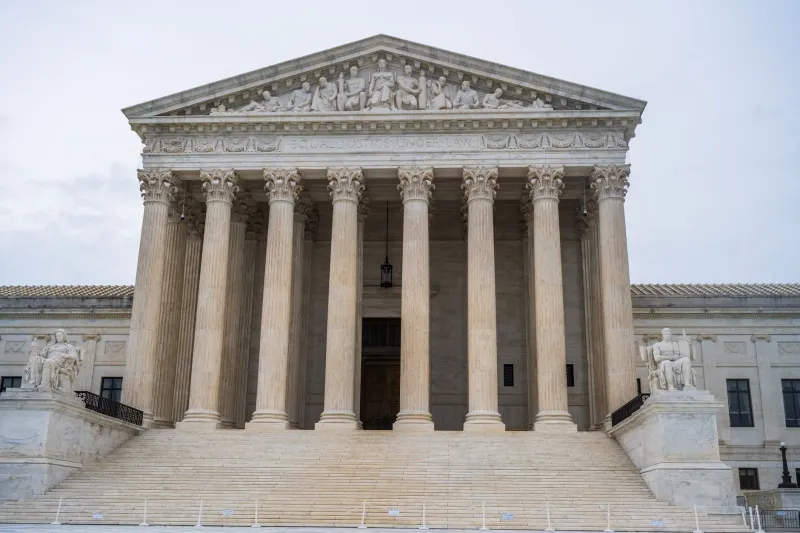
The federal picture sharpens the point. Only a small number of Article III judges have been of South Asian descent, among them appellate jurists such as Sri Srinivasan and Amul Thapar. Their careers are distinguished; their rarity is the story. A community of several million people producing a handful of lifetime-tenured judges is not a pipeline that works. It is a pipeline that occasionally leaks a success.
The ballot is not neutral
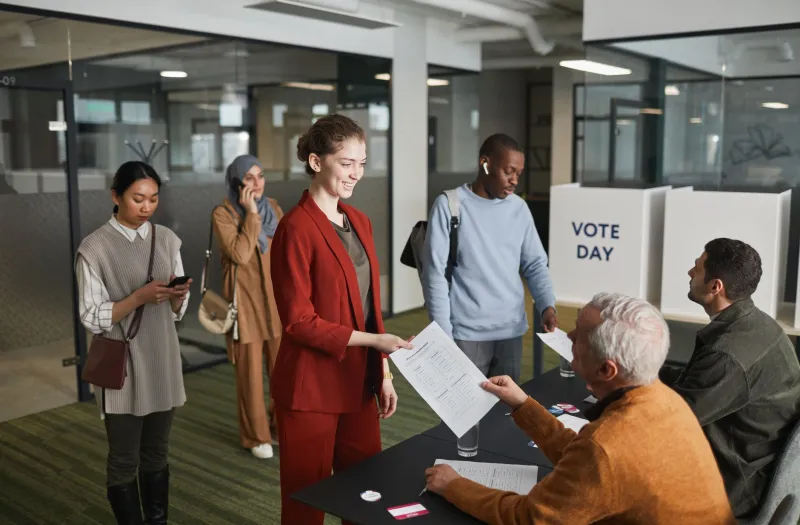
Judicial elections deserve separate attention because they are, in much of the country, the ordinary route to the bench. Down-ballot judicial races are low-information contests decided by name recognition, bar ratings, and whatever a voter's sample ballot suggests. In those conditions, candidates with non-Anglo surnames face a measurable disadvantage that has nothing to do with their jurisprudence.
Nor is the disadvantage evenly distributed. A South Asian American woman running for a suburban trial court seat may face a different electoral math than a man running in a dense urban district. Fundraising networks, endorsement slates, and newspaper editorial boards all mediate the outcome.
The remedy is unglamorous: judicial diversity commissions that publish data, appointment processes with published criteria, and bar associations that treat recruitment as a duty rather than a courtesy. None of that makes for a stirring photograph. All of it moves the arithmetic.
What language access actually means
Here the argument moves from symbolism to consequence. Descriptive representation matters less because a judge 'looks like' a litigant than because a bench stocked from a narrow slice of the profession tends to share a narrow set of assumptions about credibility, accent, and deference.
Court interpretation is the sharper edge. South Asian languages — Bengali, Urdu, Gujarati, Punjabi, Tamil, Nepali, Hindi — are among the fastest-growing language needs in American courthouses, and among the least reliably staffed. A hearing that runs through a telephone interpreter in a language the court has no certified speaker for is a hearing where tone, hesitation, and idiom vanish. A judge who has never had to think about that vanishing is unlikely to build a courtroom around it.
Judges also shape the parts of the system nobody photographs: plea colloquies, bail determinations, credibility findings in immigration and family court, the patience granted to a pro se litigant with a thick accent and a thin file. Those are discretionary judgments, and discretion is where background quietly enters.
Beyond the first photograph
The honest case for diversifying the bench is not that justice requires mirror images of the population. It is that institutions which draw their judges from a single narrow channel develop blind spots, and blind spots in a courtroom are not abstractions — they are outcomes.
South Asian Americans are no longer asking for a place at the table. They are asking why, having built the practice, the credentials, and the public record, so few of them are seated behind it. The answer, in 2026, is a set of procedural choices that could be changed tomorrow if anyone with a gavel cared to count.