The Spelling of Citizenship: How Voter-Roll Matching Tests South Asian American Names
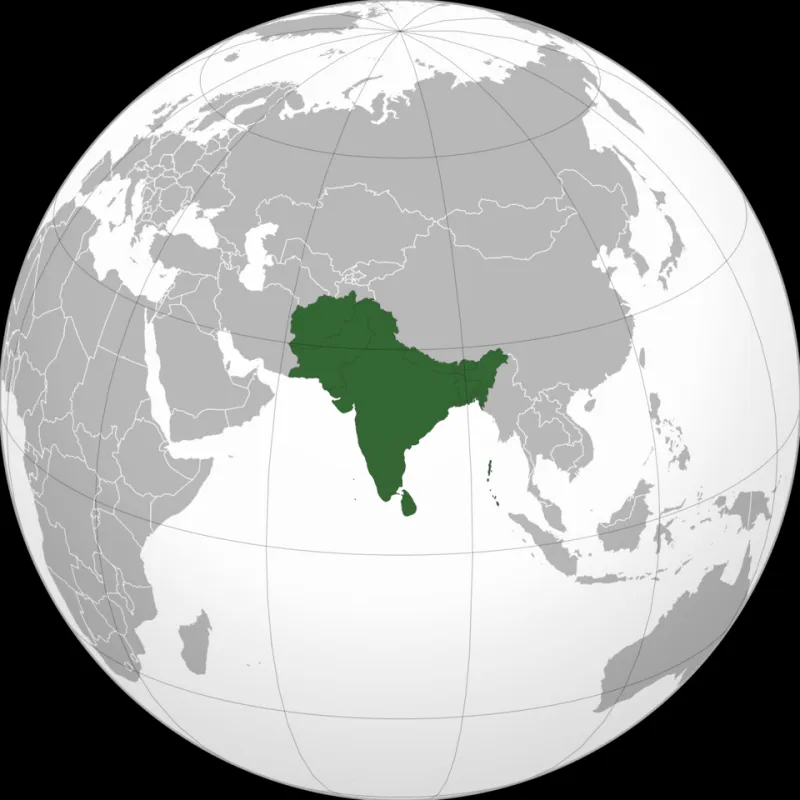
Photo: DrQuantum, CC BY-SA 3.0, via Wikimedia Commons
A voter registration card is a small document with a large claim on citizenship. It records a name, an address, and a promise that the state will count the person who appears before a precinct worker on Election Day. But before that promise is kept, the name must survive a quieter process: the comparison of registration records against other government lists. For many South Asian American voters, that comparison is where the trouble begins.
The problem is not that election officials set out to remove eligible voters. The problem is that list maintenance systems often treat a name as a fixed string of characters rather than a human identity shaped by migration, marriage, and transliteration. A hyphen added after marriage, a middle name dropped at naturalization, a surname recorded in a different order overseas, or a single vowel changed between Bengali and English—each can produce the same result: a mismatch flag. In 2026, as counties reviewed their rolls after the midterms, those flags again raised a question that courts and civic groups have pressed for years. Whose names are treated as close enough to count?
What the Law Requires—and What It Permits
The National Voter Registration Act of 1993 sets the basic architecture. Section 8 directs states to conduct list maintenance that is uniform, nondiscriminatory, and consistent with the Voting Rights Act. It also imposes limits. A state may not systematically remove names from the rolls within 90 days of a federal election. Before removing a registrant for failure to vote, officials generally must send a notice and wait through two federal election cycles. And a voter who has moved within the same registrar's jurisdiction must be allowed to update a registration or vote by provisional ballot.
Those protections matter, but they do not resolve the matching problem on their own. Federal law does not require every county to adopt a single matching standard. The Help America Vote Act of 2002 pushed states toward centralized voter databases and prompted many jurisdictions to compare registration records with driver's license files or Social Security data. Some states use exact-match rules; others use fuzzy matching; still others rely on manual review. The result is a patchwork in which the same South Asian surname might be flagged in one county and accepted in the next.
The Matching Problem
South Asian naming conventions do not fit neatly into the boxes that many American forms assume. A voter may have a given name, a middle name that functions as a patronymic, a family name, and a religious or honorific prefix, all of which can appear in different orders on different documents. A woman may retain her birth surname professionally and use her husband's surname on a driver's license. A naturalized citizen may have a passport name that reflects an official transliteration chosen decades ago, while a state identification card uses a later spelling. A hyphen is not decorative; it is a legal choice made at marriage, and it can break a database match.
These are not exotic edge cases. They are ordinary consequences of a diaspora that spans multiple languages and legal systems. When a county relies on an automated match, a name that appears in a different but recognizable form may be routed to a challenge list. The voter then receives a notice that can look like bureaucratic noise—or, worse, no notice at all if an address has changed. By the time the voter learns of the problem, the registration deadline may have passed.
The 2026 Midterms and the Purge Ledger
The 2026 midterms did not invent this problem, but they made it visible. Across the country, civic groups ran registration checks and hotlines, and they again encountered voters whose registrations had been marked inactive or removed after a name mismatch. The details varied. In some cases, a voter had registered with a hyphenated surname and a state database held only the unhyphenated form. In others, a middle initial appeared on one record but not another. In still others, a transliteration difference—an extra 'h,' a different vowel, a doubled consonant—was enough to trigger review.
It is important to be precise about what the law allows. Election officials may remove registrants who have died, moved out of the jurisdiction, been convicted of a disqualifying felony, or been adjudicated mentally incapacitated under state law. They may also remove voters who fail to respond to a confirmation notice and do not vote in two federal elections. The legal question is not whether maintenance is permitted. It is whether the methods used to identify ineligible voters are accurate enough to avoid treating eligible ones as suspects.
The 2026 cycle also showed how much depends on local administration. A secretary of state may issue guidance, but county registrars decide how aggressively to flag mismatches, how many notices to send, and whether to allow same-day corrections. In places with large South Asian populations, the difference between a manual review and an automated purge can determine whether a temple volunteer, a small-business owner, or a newly naturalized citizen appears on the rolls.
What Local Officials Can Do
There are practical fixes that do not require new federal legislation. Counties can adopt transparent matching standards that allow common transliteration variants, recognize hyphens and middle-name differences, and require human review before a registration is removed. They can send notices in the languages spoken by affected communities, as required in jurisdictions covered by Section 203 of the Voting Rights Act. They can train poll workers to offer provisional ballots when a name does not match the poll book, rather than turning the voter away. And they can publish clear data on how many registrations are challenged, removed, or restored—so that the public can see whether maintenance is working as intended.
What Diaspora Groups Can Do Before the Next Deadline
Civic organizations cannot replace election officials, but they can reduce the harm. Registration drives should collect full legal names, former names, hyphens, and alternate spellings, and they should encourage voters to check their registrations well before every deadline. Temples, mosques, community centers, and student groups can host verification tables where voters compare their registration records with their identification documents. Legal aid groups can prepare know-your-rights materials explaining provisional ballots and the notice-and-wait requirements under the NVRA. And community members can report patterns—not individual suspicions—to county registrars and state election boards so that systemic mismatches are corrected before the next federal election.
The hyphen that costs a vote is not a hyphen at all. It is a failure of administration—a database that cannot see a citizen because it is looking for a string. The 2026 midterms showed that the problem is real and that it is not self-correcting. The next registration deadline will arrive with the same names, the same documents, and the same human lives behind them. The question is whether election officials and diaspora groups will treat those names as identities to be verified or as errors to be purged.