The Summons and the Silence: South Asian Americans and the Missing Jury Box
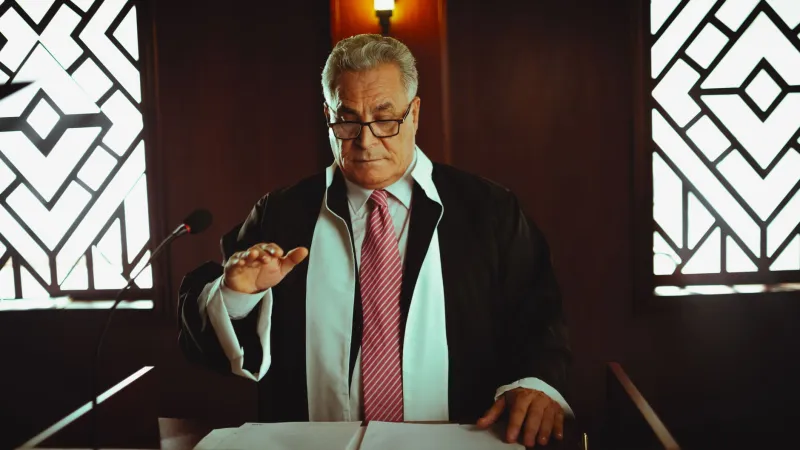
As 2026 draws to a close, the familiar rituals of American civic life are under scrutiny. Voting draws the headlines, and debates over representation on the bench draw the think pieces. But in county courthouses across the country, another civic institution quietly asks for participation: the jury box. The summons is not a ballot. It does not arrive with a candidate's face or a party label. It asks a citizen to sit in judgment of a neighbor. For South Asian Americans, that request is too often met with silence, not because the community lacks civic feeling, but because the path from mailbox to jury box is cluttered with obstacles that courts have been slow to see.
The Duty That Sits Closer Than the Ballot
Voting is the most visible civic act in a democracy, and for good reason. It selects the people who write laws and run governments. Jury service is different. It is compulsory, random, and intimate. It gives ordinary people power over liberty, damages, family security, and the credibility of a criminal charge. The Sixth Amendment guarantees a jury drawn from a fair cross-section of the community, and state constitutions carry parallel promises. When jury pools do not reflect the communities they serve, the legitimacy of verdicts weakens, even when no individual juror behaves improperly.
South Asian Americans, whether citizens by birth or naturalization, are part of that public. Their absence from jury pools is a missing link in the diaspora's legal voice. It is distinct from voting, which shapes who governs, and from representation on the bench, which shapes who interprets the law from above. The jury is where citizens interpret facts from below. If South Asian Americans are rarely in that room, the community is not merely underrepresented in a ceremonial sense. It is absent from a practical exercise of judgment that affects everyone who enters a courtroom.
Why the Summons Is Not Always Heard
Court administrators and community advocates describe a cluster of reasons why the summons goes unanswered. The first is simple response. A jury summons can look like bureaucracy, and bureaucracy is easy to postpone. For immigrant families, official mail carries a different weight. It can trigger worry about immigration status, even when the recipient is a citizen. Noncitizens are generally ineligible for jury service, but confusion between jury duty and immigration enforcement can chill response in mixed-status households. A citizen may fear that answering a summons will expose a family member, however irrational that fear may be.
The second obstacle is language. Jury questionnaires, instructions, and voir dire questions are written in the vocabulary of the courthouse, not the vocabulary of everyday life. Limited English proficiency is not confined to recent arrivals. It can affect older residents, people who work in multilingual households, and citizens who are fluent in conversation but lost in legal prose. Courts provide interpreters for defendants and witnesses, but jury operations are less consistent. A person who cannot follow the instructions may simply discard the summons rather than risk embarrassment.
The third obstacle is economic. Jury pay is modest, and service can last days or weeks. Gig workers, small business owners, shift employees, and caregivers may calculate that they cannot afford the disruption. The calculation is especially sharp in immigrant households where one income supports several people. Courts have excuse policies, but the policies are not always explained in plain language, and the process for seeking a deferral can feel like another maze.
The fourth obstacle is cultural. Jury trial is a distinctive Anglo-American institution. Many South Asian Americans grew up in countries where judges, not juries, decide facts, or where the legal system is viewed with suspicion rather than trust. That background does not make the community less civic. It makes the jury summons unfamiliar. Familiarity can be taught, but only if someone bothers to teach it.
The fifth obstacle is trust. Government agencies are not neutral in every immigrant memory. For some families, a courthouse is a place where bad things happen, not a place where ordinary people are welcomed. That distrust is not irrational. It is inherited from experience. Courts that want diverse juries must account for it rather than scold the people who feel it.
The Accommodation Gap
Religious accommodation is often discussed in schools and workplaces, less often in jury assembly rooms. A turban, a beard, a prayer schedule, a fasting day, or a religious objection to swearing an oath are not exotic complications. They are ordinary features of South Asian American life. Courts can offer alternatives to the oath, schedule breaks for prayer, and train staff to avoid unnecessary comments about appearance. But accommodation depends on asking, and many jurors do not know they can ask.
Language accommodation is harder during deliberations. An interpreter can help a juror understand testimony, but deliberation involves rapid exchange, interruption, and nuance. Courts need protocols that protect both the juror's participation and the integrity of the process. That requires planning before a panel is seated, not improvisation after a juror raises a hand.
Rebuilding Trust, One Panel at a Time
Some courts are moving in the right direction. Multilingual summons materials, online response systems, clearer excuse policies, and transportation or child care support can make service less burdensome. Bar associations and South Asian community organizations can demystify the process through mock jury exercises, civic education sessions, and plain-language guides. Naturalization ceremonies are an underused setting for explaining jury duty to new citizens.
But outreach cannot be a one-way lecture. Courts should collect better data on who responds, who is excused, and who never appears. Without that data, underrepresentation remains a suspicion rather than a problem that can be measured and corrected. Community groups, in turn, should treat jury duty as civic literacy, not an inconvenience to be dodged. Employers can help by treating jury service as ordinary civic leave rather than a scheduling crisis.
What Courts and Communities Owe Each Other
The empty jury box is not a verdict on South Asian Americans. It is an invitation to close a gap. Courts owe the community clear information, meaningful accommodation, and a process that does not punish people for asking questions. The community owes the courts a serious response when the summons arrives. Jury service is not merely an interruption of work. It is a form of accountability, and a democracy that asks some citizens to judge their peers while quietly excusing others from the room is a democracy that has not finished its work.