The Checkbox Before the Rescue: U-Visa Certification and South Asian Survivors in 2026

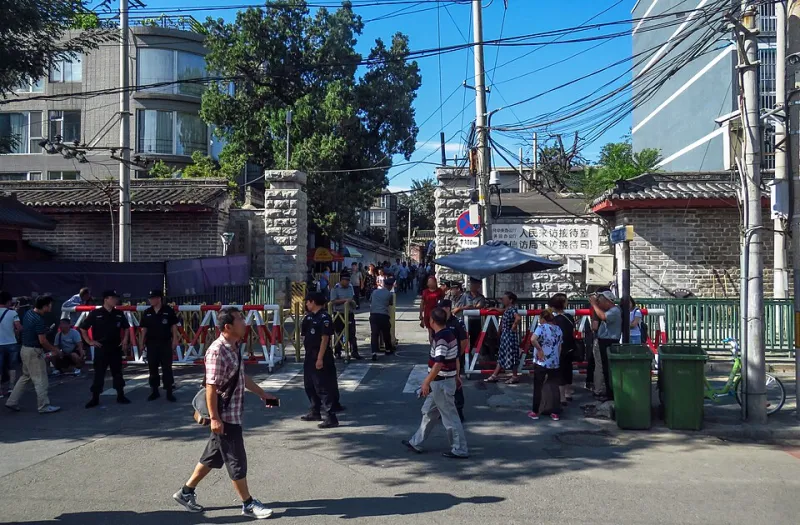
Photo: Kim Boek from Seoul, South Korea, CC BY 2.0, via Wikimedia Commons
In federal immigration law, U nonimmigrant status begins less with a courtroom than with a local official's signature. For South Asian survivors of domestic violence, trafficking, or other qualifying crimes, the U-visa process is often described as a lifeline. Yet the form that starts it—Supplement B to the I-918 petition—is not a visa, not a grant of status, and not a shield. In 2026, the practical question for survivors and their advocates is narrower and harder: how does a local law-enforcement agency decide whether to sign, and what can a community demand when it does not?
What Certification Actually Is
The U-visa exists to encourage victims of certain crimes to report and cooperate with law enforcement. The certification component asks a police department, prosecutor's office, court, or qualifying labor agency to confirm that the applicant was a victim of a qualifying crime and was, is, or is likely to be helpful in the investigation or prosecution. It is a factual and discretionary attestation, not an immigration determination. USCIS retains the authority to decide whether a person qualifies for U nonimmigrant status.
That division of authority creates a peculiar geography of delay. Federal adjudication may take years, and the statutory cap of 10,000 principal U visas per year produces a waiting list. But before any of that, a survivor must persuade a local agency to act. Federal guidance asks certifying agencies to respond within a set period, yet the process is not designed as an entitlement. A police chief who declines to sign has not denied a visa; the chief has simply declined to open the first door.
Discretion Is Local, and Uneven
Municipal cooperation varies widely. Some departments maintain written U-visa policies, designate a certifying official, and publish a timeline. Others treat certification as a favor, require a survivor to pursue a criminal case that may have stalled, or conflate a lack of prosecution with a lack of helpfulness. In South Asian American communities, those inconsistencies collide with language barriers, fear of police, financial dependence, and family pressure to keep disputes private. A survivor who speaks Gujarati, Bengali, Tamil, Punjabi, or Urdu may encounter an agency with no interpreter, no translated forms, and no clear point of contact.
Discretion also carries the imprint of local politics. In 2026, city councils and police accountability boards in several jurisdictions are revisiting how their agencies handle immigration-related requests. Some states and localities have adopted policies limiting cooperation with federal immigration enforcement, but those policies do not automatically translate into robust U-visa certification practices. A sanctuary resolution can coexist with a police department that still asks a survivor to produce a prosecution outcome before signing. Advocates should read the fine print of local policy, not just the press release.
The result is a form of administrative lottery. Two survivors with similar facts, living in neighboring towns, may face different timelines and different expectations. That inconsistency is not merely inconvenient; it shapes whether a person reports in the first place. A survivor weighing a police report against the risk of deportation, retaliation, or community exposure may reasonably conclude that the local agency is not a reliable partner.
The Backlog After the Signature
Even a signed certification does not confer work authorization, deferred action, or protection from removal. It supports a pending petition. USCIS must still adjudicate the case, conduct background checks, and determine whether the applicant meets the statutory requirements. Because of the annual cap, many petitioners wait years before receiving a final decision, and some receive deferred action in the interim. During that period, a survivor may remain legally vulnerable, economically dependent, or exposed to an abuser who weaponizes immigration status.
This is the central confusion that 2026 advocacy must address: a signature is evidence, not asylum. It does not stop a spouse from threatening to withdraw support. It does not guarantee a work permit. It does not erase the trauma of a police interview or the fear of a community's judgment. Immigration relief and personal safety are related, but they are not the same case.
What Advocates Can Demand From Local Agencies
A practical agenda for 2026 begins with procedural transparency. Advocates can ask local police and prosecutors to adopt a written U-visa certification policy that identifies the certifying official, states the documents required, explains how helpfulness is assessed, and sets a response timeline. Agencies should provide language access at every stage, including translated forms and qualified interpreters. A survivor should not have to explain a coercive marriage in a language she does not control.
Advocates can also press for consistent treatment of cases that do not end in conviction. Helpfulness is not identical to successful prosecution. A survivor who reports a crime, provides evidence, or participates in an investigation may be helpful even if charges are later dropped. Local agencies should say so in writing. Where a request is denied, they should provide a written explanation that a survivor and her attorney can review.
Community organizations can supplement those demands with safety planning, referrals to licensed immigration attorneys, and education about notario fraud. They can also participate in local oversight: city council hearings, police accountability boards, and community advisory commissions are venues where the diaspora can ask what its local agencies actually do with certification requests. The goal is not to compel a particular outcome in every case, but to replace arbitrary discretion with published standards and a paper trail.
Why a Checked Box Is Not a Rescue
None of this means certification is unimportant. For some survivors, it is the difference between a viable petition and no petition at all. But the language of rescue is misleading. A local signature cannot guarantee federal relief, cannot secure housing, cannot undo economic abuse, and cannot make a family or a community safe. It is one bureaucratic step in a longer chain of legal, social-service, and personal decisions.
The responsible 2026 message is neither cynicism nor celebration. It is a demand for local agencies to act predictably, in writing, and with language access—and a refusal to let a checked box stand in for the protection a survivor actually needs. The signature matters. It frees no one by itself.