The Credential Gap: When Immigration Advice Comes From Someone the Law Never Licensed
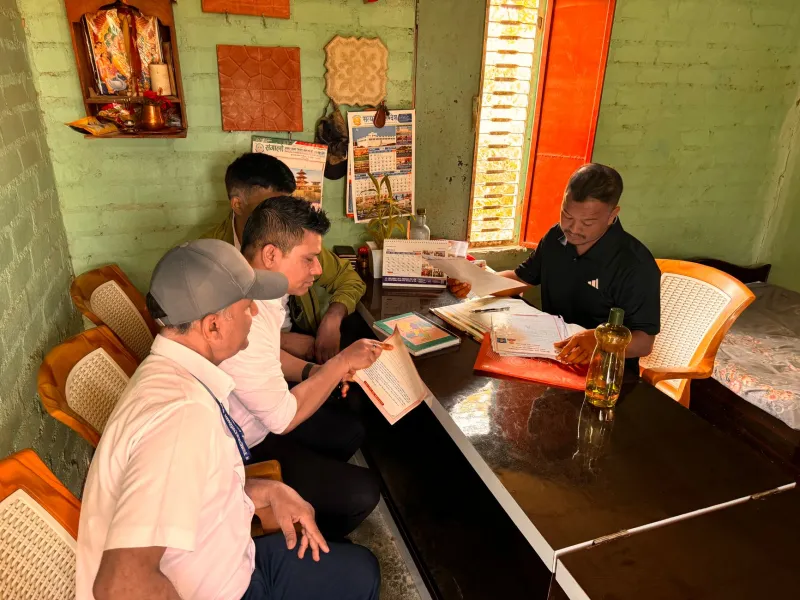
In many South Asian American communities, the immigration adviser is not found through a bar association directory. The adviser is a family friend, a community elder, a storefront notary, or a 'visa consultant' whose office sits beside a grocery and a money-transfer counter. The pitch is familiar: lower fees than a lawyer, fluency in the family's language, and confidence that the forms are simple enough for anyone to file. Sometimes the work is competent. Sometimes it is not. And when it is not, the consequences can be measured in more than dollars.
The Trusted Stranger With the Filing Cabinet
Unauthorized practice of law in immigration matters is not a single act. It ranges from a notary who explains which petition to file, to a document preparer who advises a client to skip a disclosure, to a consultant who promises to 'handle' a removal case without ever entering an appearance. Immigration law is federal, but the regulation of who may give legal advice and represent clients is layered. Licensed attorneys and, in limited settings, Department of Justice-accredited representatives may advise and represent. A notary public generally may not. A document preparer may type information a client supplies, but selecting a visa category, interpreting eligibility, or recommending how to answer a question about past removals crosses from clerical help into legal judgment.
The confusion is understandable. In several South Asian countries, a notary's role can carry greater formal weight than it does in the United States. The English word 'notary' travels, but the American legal meaning does not. Add language barriers, a shortage of affordable immigration attorneys, and the reasonable fear that a free consultation will end in a bill the family cannot pay, and the unauthorized consultant becomes not a villain in the abstract but a familiar and seemingly practical solution.
A Due-Process Problem Disguised as a Bad Purchase
Consumer-protection language is accurate but incomplete. A flawed filing is not merely a defective service. It can become a due-process injury. A missed deadline can end a case. A misstatement on a form can later be treated as a credibility problem or a fraud finding. A petition filed under the wrong category can waste years of a priority date. An application abandoned because the consultant stopped answering calls can leave a family out of status and, in some cases, in removal proceedings.
Once a case reaches immigration court, the damage is difficult to undo. The person who gave the bad advice was never a lawyer, so there is no bar complaint that leads to discipline, no malpractice insurance, and often no verifiable business entity to sue. The client may not have a copy of the filing. The consultant may have used a post-office box that is now closed. Courts and nonprofit legal providers see the aftermath, but the enforcement system rarely sees the cause.
This is where the due-process claim becomes sharper. The American legal system assumes that people appearing before a tribunal have access to competent advice or a meaningful chance to proceed pro se. It does not guarantee a lawyer in every immigration case. It does, however, depend on the absence of impersonation. When a nonlawyer holds himself out as a legal professional, the harm is not only to the individual client. It is to the reliability of the record on which the government itself relies.
What 2026 Enforcement Looks Like
In 2026, state attorneys general, bar associations, and unauthorized-practice committees are paying closer attention to immigration-services fraud. Consumer alerts now warn against 'notarios' and 'visa consultants' who promise outcomes they cannot deliver. Some states require immigration consultants to provide written contracts, post bonds, or make specific disclosures. Others rely on general consumer-protection statutes and cease-and-desist authority. The result is a patchwork, not a national floor.
Federal tools exist as well. The Department of Justice maintains a list of recognized organizations and accredited representatives, and the Federal Trade Commission has brought cases against immigration-services schemes. But enforcement is reactive. It tends to follow complaints, and complaints tend to follow catastrophe. By then, the filing deadline has passed or the removal hearing has been held.
The more difficult gap is structural. Immigration legal services are underfunded relative to need, and language access remains uneven. A family that cannot find or afford a licensed attorney is not irrational to take a chance on a cheaper adviser. The policy response cannot be only punishment after the fact. It must also include credible public information about who may lawfully give advice, support for nonprofit legal providers, and community education that reaches people before they sign a contract.
The Victim's Narrow Path
For someone who suspects that an unauthorized consultant has mishandled a case, the first step is to preserve evidence. Obtain a complete copy of every filing, receipt notice, contract, text message, and payment record. If a deadline or hearing is pending, do not miss it, even if the original adviser promised to handle it. Contact a licensed immigration attorney or a Department of Justice-recognized nonprofit legal services provider immediately. Verify credentials through the state bar and the Executive Office for Immigration Review's list of accredited representatives. File complaints with the state attorney general's consumer-protection division, the state bar's unauthorized-practice committee if one exists, and the FTC. These steps do not guarantee relief, but they create a record and may help others.
Remedies are limited and time-sensitive. In some circumstances, a motion to reopen or reconsider may be available, and a licensed attorney can assess whether the prior conduct supports a claim for ineffective assistance or fraud. But no legal mechanism restores a lost year cleanly. The narrow path is a reminder that prevention is not a slogan; it is the only reliable due-process protection in a system that cannot easily correct the damage done by an unlicensed hand.
The Credential Is Not a Formality
The South Asian American diaspora includes doctors, engineers, shopkeepers, students, and workers whose immigration status often depends on documents prepared under pressure. Community institutions can help by inviting legal-aid providers to speak at temples, mosques, churches, and cultural associations, and by treating credential verification as a form of mutual care rather than suspicion. Bar associations can make unauthorized-practice enforcement more visible. States can close the disclosure gaps that let unlicensed consultants advertise with impunity.
The law's promise is not that every immigrant will have a lawyer. It is that no one's case should be decided on paperwork drafted by someone pretending to be one. In 2026, that promise still depends on the willingness of institutions to treat the credential gap as a justice problem, not merely a consumer complaint.