Sacred Ground and Parking Minimums: South Asian Temples Confront Local Zoning in 2026
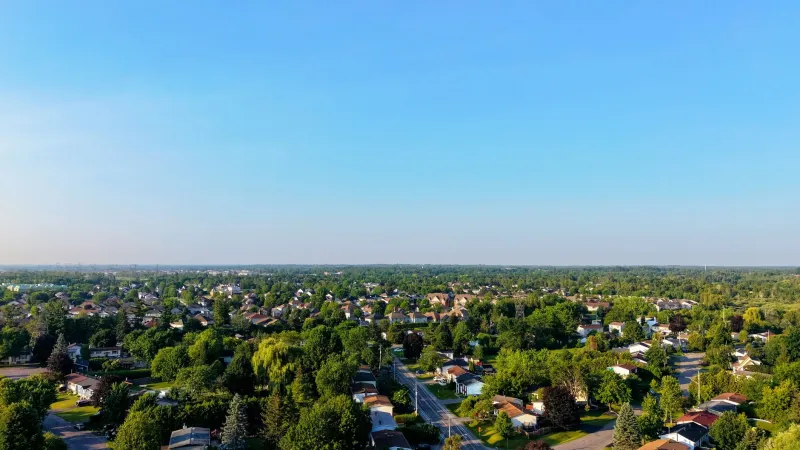
On a Tuesday night in a suburban planning commission meeting, the agenda item is a parking variance. The applicant is a Hindu temple seeking to convert a former warehouse into a permanent worship space. Neighbors cite traffic, lighting, and “neighborhood character.” The temple’s attorney cites the Religious Land Use and Institutionalized Persons Act. By the time the board votes, the proceeding has become something more than a land-use hearing: it is a civic argument about who belongs, and on what terms.
In 2026, some of the most consequential religious-liberty disputes in the United States are not reaching the Supreme Court. They are unfolding in municipal hearing rooms, where zoning boards weigh parking counts, fire access, and height limits against the constitutional guarantee that government may not substantially burden religious exercise without a compelling reason.
A Statute Built for the Hearing Room
RLUIPA, enacted in 2000, was designed for exactly this setting. Its land-use provisions prohibit governments from imposing a “substantial burden” on religious exercise unless the burden is the least restrictive means of furthering a compelling governmental interest. The statute also bars unequal treatment—allowing a church or temple to be treated worse than a comparable secular assembly—and prohibits discrimination and unreasonable limits on religious assemblies.
The legal test is demanding, but it is not automatic. A congregation must show that a denial or condition genuinely burdens its religious practice, not merely that it is inconvenient or expensive. A board may still prevail if it can demonstrate a compelling interest, such as genuine safety hazards, and show that its solution is narrowly tailored. Courts have grown more sophisticated about distinguishing legitimate land-use concerns from pretextual ones.
The Anatomy of Local Resistance
Most zoning disputes begin with ordinary municipal concerns. Parking is the most common. Traffic, noise, stormwater runoff, building height, and emergency vehicle access follow. These are not invented problems. Local governments have real obligations to protect public safety and neighborhood livability.
The difficulty arises when a congregation’s application is subjected to a standard that no other applicant faces. A board may demand a traffic study that commercial developers are not required to produce. It may impose conditions—expensive landscaping, off-site road improvements, restricted hours—that add cost without a clear safety rationale. It may defer a vote repeatedly while neighbors organize against the project. None of these actions is necessarily unlawful on its own. Together, they can form a pattern that courts scrutinize.
South Asian faith communities—Hindu, Sikh, Jain, Muslim, and Buddhist congregations—often encounter this dynamic after years of meeting in rented halls, basements, or converted office space. A permanent home is a milestone. It is also a political event. The proposal activates neighborhood associations, local newspapers, and sometimes cultural anxieties that are rarely stated directly. Phrases such as “not compatible with the area” or “too much traffic” may be sincere. They may also function as proxies for something else.
When a Temple Becomes a Civic Test
Zoning hearings are not designed to adjudicate belonging. They are designed to apply a comprehensive plan and a set of ordinances. Yet the two questions often merge. A board that would readily approve a comparable secular assembly—a fraternal lodge, a community center, a private school—must be prepared to explain why a religious assembly warrants different treatment.
Congregations, for their part, must decide how to make their case. Some emphasize community service: food drives, language classes, senior programs, cultural events. Others rely on legal argument alone. The most effective approach is usually both. A record that demonstrates public benefit, addresses genuine safety concerns, and documents unequal treatment gives a reviewing court something to work with. A record built entirely on constitutional grievance may win sympathy but lose votes.
Language access matters as well. Many temple communities include members with limited English proficiency. Planning staff may not provide translated notices or interpreters. That omission does not automatically violate RLUIPA, but it can distort the process: affected residents cannot participate, and the board hears only one side. Providing interpretation and translated summaries is not merely courteous. It builds a record that the congregation engaged in good faith.
Lessons for Congregations and Boards
For congregations, the practical lessons are clear. Engage planning staff before filing. Commission independent traffic and parking studies. Document every meeting and every condition. Build interfaith and neighborhood allies early. Understand the comprehensive plan, because a proposal that conflicts with it will face a harder path even under RLUIPA. And preserve the record for appeal—federal litigation is expensive and slow, but it is a real check on local discretion.
For boards, the lessons are equally clear. Apply consistent standards. Write findings that connect conditions to evidence. Avoid ad hoc requirements that appear only when a religious group applies. Treat clergy and congregants with the same procedural respect afforded to developers. A hearing room is not a courtroom, but it is a forum where constitutional rights are often made or unmade in practice.
The 2026 debates over temple zoning are not a simple story of villains and victims. They are a test of whether local democracy can accommodate religious difference without treating it as a problem to be managed away. Religious liberty is not a trump card that erases parking rules and fire codes. It is, however, a constraint on arbitrary local power. The zoning board is where that constraint is first tested—long before any judge sees the file.